There’s a moment that happens in clinic more often than people realise.
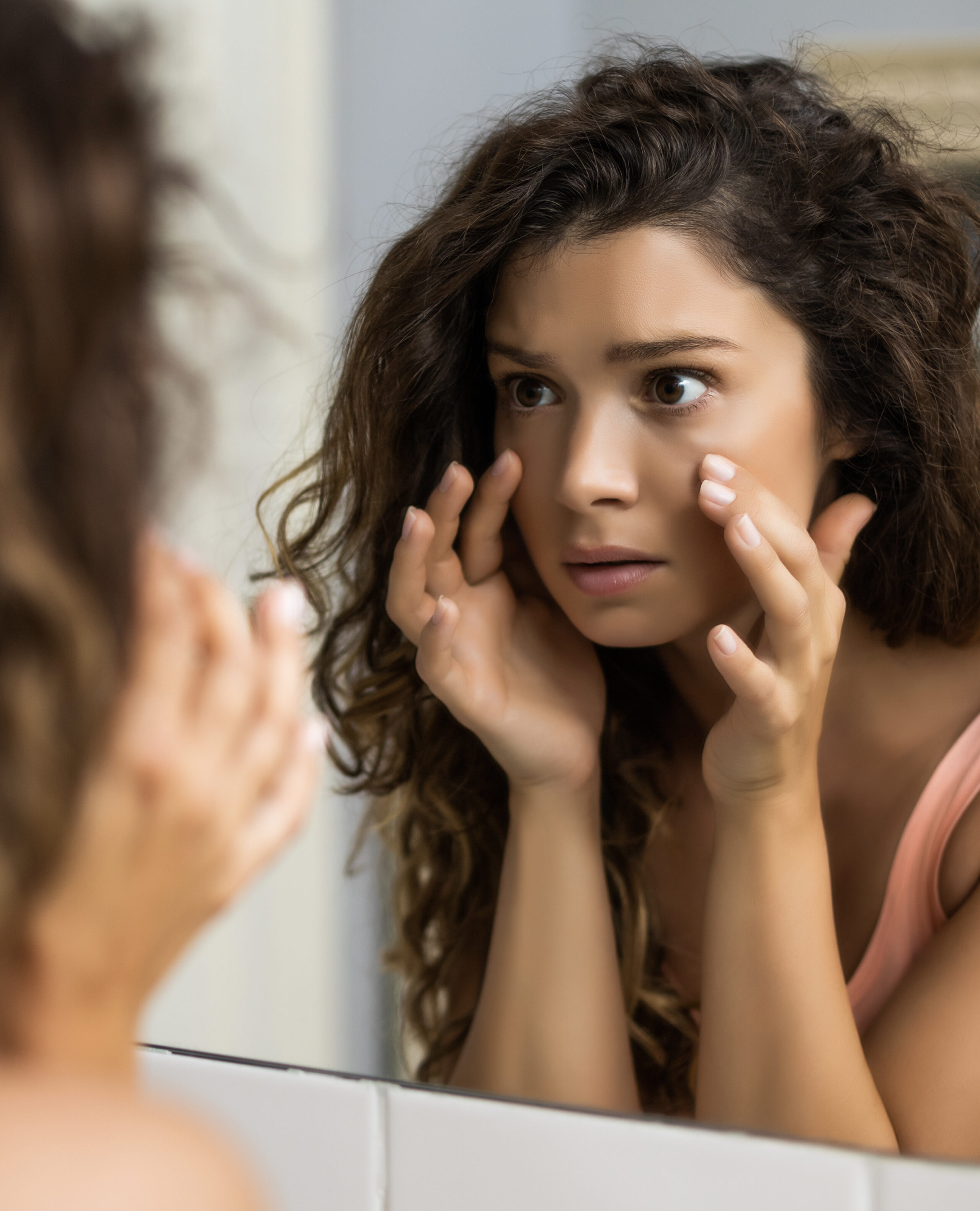
A patient sits down, looks in the mirror, and pauses. Not dramatically, just long enough to notice. Then comes the line I hear almost daily:
“I just look… tired.”
Not older. Not drastically different. Just not quite themselves.
And somewhere in that conversation, almost inevitably:
“Do I need filler?”
Patients often ask me what the best skin ageing treatment is, and they’re usually surprised that the answer isn’t always filler.
Because what most people are noticing isn’t a single change. It’s a collection of small shifts that have quietly layered on top of each other over time. And the difficulty is, they don’t all happen in the same place, or for the same reason.
It’s a fair question. It’s just rarely the right one.
Because what most people are noticing isn’t a single change. It’s a collection of small shifts that have quietly layered on top of each other over time. And the difficulty is, they don’t all happen in the same place, or for the same reason.
What’s really changing beneath the surface
One of the things I’ve learnt over the years is that patients are very good at spotting that something has changed, but not always what. They’ll point to a line, or a fold, or a shadow under the eyes. But those are usually just the final expression of something deeper.
Take collagen, for example. We talk about it all the time, but rarely in a way that feels real. From your late twenties, it declines slowly, about one percent each year. Nothing dramatic. But over time, the skin becomes thinner, less resilient, less able to reflect light in that effortless way we associate with youth.
Patients don’t walk in saying, “I think I’ve lost collagen.”
They say, “My skin just looks dull,” or “I don’t look as fresh anymore.”
And that’s often the first clue.
It’s also why my approach has shifted quite significantly over the past few years. I’m far less interested in simply replacing volume, and much more focused on stimulating what the skin has lost. There’s good evidence for this too. Studies such as Yutskovskaya et al. 2014 show that calcium hydroxylapatite can stimulate fibroblasts to produce new collagen, essentially giving the skin a framework to rebuild itself.
And once you start thinking that way, everything else begins to make more sense.
It’s not just volume loss, it’s redistribution
The anatomical work by Rohrich and Pessa 2007 really changed how we understand this. It’s not a deflated face. It’s a face that has moved.
For years, ageing was described as a loss of volume. But in reality, fat in the face behaves far less predictably than that.
It reduces in some areas, shifts in others, and becomes less supported over time. This is why I see the same pattern again and again in clinic, hollowing under the eyes, flattening through the midface, and a heaviness lower down that patients often struggle to describe.
If you treat this as simple volume loss and add filler everywhere, you can very quickly create a result that feels unnatural.
The interesting part is that the face hasn’t simply lost volume. It has changed shape.
Even the structure of the face changes
What many people don’t realise is that even the framework of the face is changing at the same time. The bones themselves gradually remodel. The eye sockets widen, the midface retrudes slightly, the jawline softens. Research such as Shaw et al. 2011 highlights just how much of what we see externally is actually driven by these deeper structural changes.
Which is why treating the surface alone rarely gives the result patients are hoping for.
And then there’s the part patients find hardest to describe, but often notice the most. The loss of what they call their “glow”. Not a line, not a fold, just a sense that their skin doesn’t look as healthy as it once did.
That’s often linked to changes in microcirculation and cellular activity. The skin is still there, but it’s not functioning in quite the same way. It’s slower to repair, slower to regenerate, less efficient overall.
So what is the most effective skin ageing treatment?
This is where regenerative treatments have started to play a much bigger role in my practice. Not because they fill, but because they improve the environment the skin is working in. Treatments like the UltraClear laser, for example, create a controlled stimulus within the dermis, encouraging collagen production and improving skin quality over time. I’ve gone into more detail on how I use this here:
https://drpaulelgey.com/ultraclear-laser/
Similarly, polynucleotides work in a different, more cellular way, supporting repair and hydration at a level that isn’t immediately visible, but becomes very apparent over time. I’ve written about that here:
https://drpaulelgey.com/polynucleotides/
So where does filler fit into all of this?
It still has a role. An important one. But it’s just one part of a much bigger picture.
In my opinion, this is where a lot of modern aesthetics has drifted slightly off course. Filler has been used as a solution for almost everything, skin quality, ageing, structure, when in reality, it was never designed to do all of that.
Used well, in the right patient, in the right place, it can restore balance beautifully.
Used indiscriminately, it creates that slightly overfilled look that so many patients are now trying to move away from.
What I’ve found works best is stepping back and asking a different question entirely.
Not, “What do we need to treat?”
But, “What is actually driving this person’s ageing?”
Because the answer is rarely just one thing.
And once you understand that, the approach becomes much more refined. It might involve combining treatments, laser to improve skin quality, biostimulators to support collagen production, regenerative treatments to enhance cellular function, each one addressing a different layer.
The result is something far more subtle. Far more natural.
Which, ultimately, is what most patients are looking for.
Not to look different.
Just to look like themselves on a better day.
And perhaps that’s the point.
Ageing isn’t about losing beauty.
It’s about losing balance.
And good aesthetic medicine, when it’s done properly, doesn’t try to change who you are.
It simply restores that balance, quietly, in a way that no one can quite explain… but everyone notices.