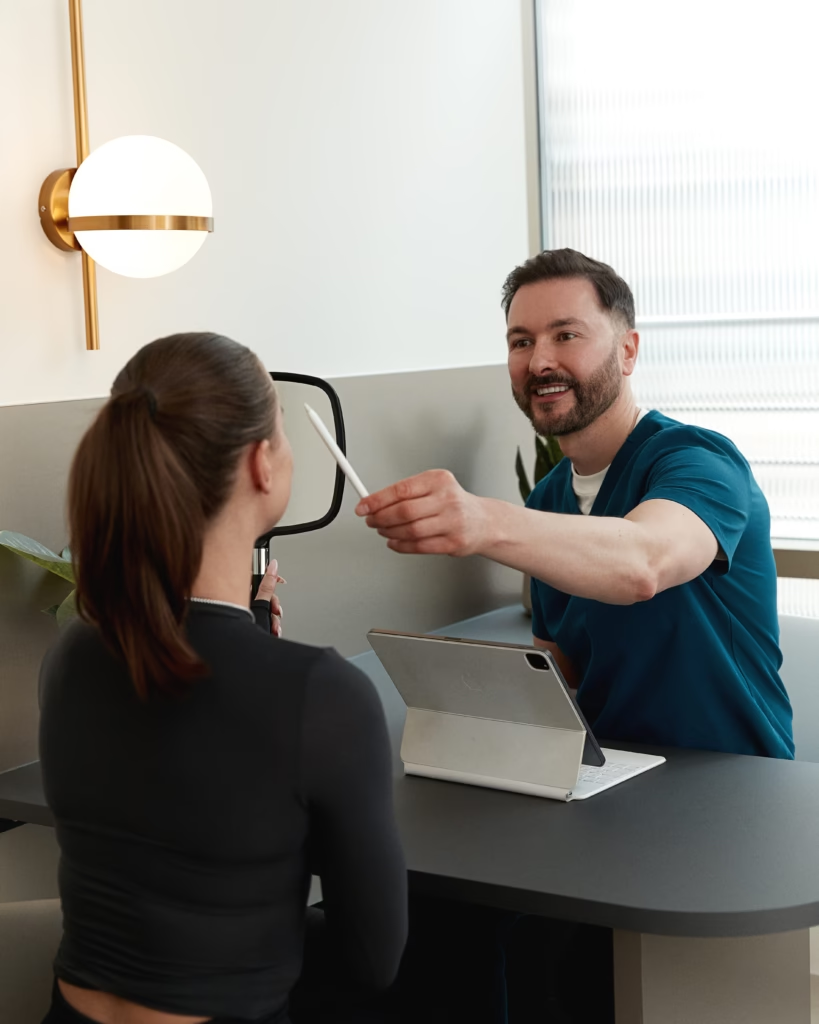
There is a quiet question I hear more often than you might think. Sometimes it is spoken directly in the consultation room, sometimes it lingers unasked in the pause before a patient commits.
“Does it really matter if my aesthetic doctor is medically trained?”
The short answer is yes. The longer answer is the one worth telling.
I qualified as a medical doctor over twenty years ago. Long before dermal fillers, skin boosters, and regenerative injectables became part of everyday conversation, my world revolved around diagnosis, physiology, anatomy, risk, and responsibility. Those years shaped how I think, how I assess faces, and, crucially, how I keep patients safe.
Aesthetic Medicine Is Still Medicine
Aesthetic medicine may look soft on the surface, but underneath it is still medicine.
When we inject, we are working in a landscape of blood vessels, nerves, muscles, lymphatics, and skin layers that vary from face to face. Knowing where product should go is only half the story. Knowing where it must never go, and what to do if something unexpected happens, is where medical training becomes invaluable.
What Twenty Years in Medicine Teaches You
Twenty years in medicine teaches you pattern recognition. You learn to spot when something is not quite right, often before it becomes obvious. You learn to assess risk quickly, to manage complications calmly, and to make decisions that prioritise long term wellbeing over short term results. These skills are not learnt on a weekend course. They are forged over years of clinical responsibility.
Safety Is More Than Avoiding Complications
In aesthetic medicine, safety is not just about avoiding rare complications. It is about appropriate patient selection, understanding medical histories, recognising body dysmorphic tendencies, and sometimes having the confidence to say no. Experience brings perspective. Not every face needs treatment, and not every request should be fulfilled.
Looking at the Whole Patient, Not Just the Face
There is also the question of ageing itself. Aesthetic treatments do not exist in isolation. Skin quality, bone structure, fat compartments, muscle activity, and systemic health all interact. My background as a GP means I look at the whole patient, not just the feature in front of me. Hormonal changes, medications, autoimmune conditions, skin disorders, and lifestyle factors all influence outcomes. Ignoring these details can compromise results and safety.
Experience, Restraint, and Natural Results
Patients often tell me they want to look fresher, not different. This is where experience quietly shows. Natural results come from restraint, proportion, and an understanding of how faces age over decades, not trends. Having seen thousands of faces in medical and aesthetic settings, I am guided less by fashion and more by anatomy and balance.
Aesthetic medicine is still medicine. It deserves the same standards of assessment, consent, clinical governance, and aftercare. When complications are rare, they are often minimised in marketing. But when they do occur, patients need someone who knows how to manage them, who understands escalation pathways, and who is accountable.
Choosing an aesthetic practitioner is a personal decision. But choosing a medically trained doctor with decades of experience brings reassurance that goes beyond the mirror. It is about trust, judgement, and knowing that your face is being treated with the same care as any other aspect of your health.
In a space that is increasingly crowded, I believe experience matters more than ever. Quietly, consistently, and always with safety at its core.
If you are considering aesthetic treatment and would like a consultation grounded in medical expertise, anatomical precision, and a natural approach to ageing, you are very welcome to book an appointment.