Most people who end up having polynucleotide treatment don’t start out looking for it. They usually arrive with a different concern altogether.
Their skin feels thin. Or dull. Or oddly fragile. Sometimes they say, “I don’t look bad, I just don’t look like myself anymore.”
That’s often the point where polynucleotides make sense.
Polynucleotides not a cosmetic shortcut. They don’t reshape the face or give instant visual payoff. In fact, if someone wants something dramatic, this is usually not the right treatment. Polynucleotides are for skin that needs help functioning properly again.
What Polynucleotides Actually Are
Polynucleotides are fragments of DNA that have been carefully processed so they can be safely used in the skin. That description sounds technical, but the role they play is surprisingly simple. Polynucleotides act as a kind of biological support system. Once injected, they help create an environment where skin cells can repair themselves more efficiently. They don’t force the skin to change. They encourage it.
This is why polynucleotides sit in a very different category to dermal fillers or anti-wrinkle injections. Nothing is being filled. Nothing is being frozen. The skin is being supported rather than controlled.
Why Some Skin Stops Responding the Way it Used To
Healthy skin is constantly renewing itself. Cells regenerate, collagen is produced, damage is repaired. Over time, that process slows. Sometimes gradually, sometimes suddenly. Stress, illness, sun exposure, inflammation, hormonal changes, or aggressive treatments can all interfere with how skin behaves. When that happens, even good skincare stops delivering results.
Polynucleotides are often used at this stage. Not because the skin looks terrible, but because it has stopped coping as well as it once did.
Cellular Regeneration Without Forcing the Issue
One of the main reasons polynucleotides are used is their ability to support cellular regeneration. They stimulate fibroblasts, the cells responsible for maintaining skin structure and repair. This stimulation is gentle. There’s no shock to the system. Instead, over time, the skin begins to feel more resilient. Less reactive. Better able to recover.
Patients rarely say, “My face looks completely different.” What they say instead is, “My skin feels stronger,” or “It doesn’t flare up the way it used to.” Those are meaningful changes, even if they’re not obvious at first glance.
Hydration That Behaves Differently

A lot of people with dehydrated skin use excellent products and still feel uncomfortable. Tightness, fine lines that come and go, makeup that never quite sits right. Polynucleotides bind water within the skin. This is not surface hydration. It’s deeper. The skin holds onto moisture more effectively, which changes how it behaves throughout the day.
Often, this is the first thing patients notice. Their skin feels calmer. Less tight. Less dependent on constant reapplication of products.
It’s hydration that doesn’t announce itself, but once it’s there, it’s missed when it’s gone.
Collagen and Elastin Support Over Time
Collagen and elastin are often talked about as if they can be switched back on instantly. In reality, it doesn’t work like that.
Polynucleotides help improve the conditions that allow collagen and elastin production to function more effectively. They don’t flood the skin with volume. They don’t stretch or inflate tissue.
What tends to happen instead is a gradual improvement in texture and firmness. Skin feels a little thicker. A little more supported. Less crepey in delicate areas.
This is why polynucleotides suit people who want improvement without anyone being able to pinpoint why they look better, particularly when considered as part of a broader full face rejuvenation approach.
Circulation and Skin That Looks Awake Again
Skin relies on microcirculation to stay healthy. When circulation slows, skin can look flat or uneven, even if it’s otherwise well cared for.
Polynucleotides help improve microcirculation within the skin. That means better oxygen delivery and better nutrient exchange at a cellular level.
The effect is subtle but noticeable. Skin tone looks more even. There’s a sense of freshness that isn’t shiny or artificial. Just healthier.
Patients often describe it as looking like they’ve had a good rest, even when nothing else has changed.
Calming Inflammation Rather Than Fighting It
Inflammation sits behind many skin concerns. Redness, sensitivity, slow healing, unpredictable reactions.
One of the less talked about benefits of polynucleotides is their anti-inflammatory effect. They help calm the skin rather than provoke it.
This makes them particularly useful for people with reactive skin, post-acne inflammation, or skin that struggles after other treatments.
Instead of pushing the skin harder, polynucleotides give it room to settle.
Healing Support After Procedures
Polynucleotides are often used after procedures like laser, microneedling, or surgery. Not as a replacement for aftercare, but as additional support. They encourage tissue repair and help reduce inflammation during recovery. Skin tends to settle more smoothly and feel more comfortable as it heals.
For patients investing in long-term skin quality, this supportive role can be just as valuable as the cosmetic benefits explored in the wider aesthetic medicine blogs.
Where Polynucleotides are Usually Used
They’re commonly used on the face, under the eyes, neck, and chest. Areas where the skin is thin or delicate tend to benefit most.
Under the eyes is a good example. Polynucleotides can improve skin quality there without adding volume, which makes them suitable when hollowness is not the main concern, unlike treatments such as tear trough correction.
Treatment plans vary. Some people use them alone. Others integrate them into a wider approach that includes other treatments.
What Treatment is Like in Real Terms
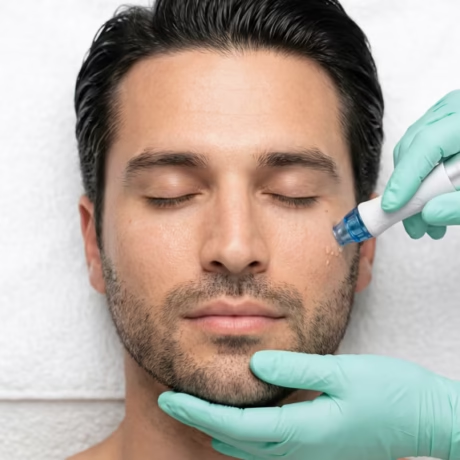
Treatment involves small injections using fine needles which most people tolerate well. However, there may be small bumps or redness afterwards. These usually settle quickly. Downtime is minimal, though some people prefer a quiet day afterwards. This is not a dramatic treatment session. It’s straightforward and relatively low-key.
When Changes Become Noticeable
Polynucleotides don’t deliver instant results. That can be frustrating for some people and reassuring for others. Early changes often involve comfort and hydration. Structural improvements follow gradually over weeks and months. A course of treatments is usually recommended, followed by maintenance if needed. The skin continues to improve as it responds.
Who This Treatment Suits Best
Polynucleotides tend to suit people who are thinking long-term. People who care about how their skin behaves, not just how it looks in the mirror on a good day. They’re often chosen by patients who already look after their skin and want something that works beneath the surface.
They’re also useful for people who feel other treatments have pushed their skin too far.
Frequently Asked Questions
- Are polynucleotides the same as fillers? No. They do not add volume or alter facial shape.
- Do they change how the face moves? No. They work within the skin, not the muscles.
- How many treatments are needed? Usually a short course spaced a few weeks apart. This varies depending on skin condition.
- Is there downtime? Minimal. Some redness or small bumps may appear briefly.
- When will I notice results? Comfort and hydration often improve first. Skin quality improves gradually over time.
- Can they be combined with other treatments? Yes. They are often used alongside or after other procedures.
Final Thoughts on Polynucleotide Treatments
Polynucleotides are not about instant gratification. They’re about giving skin the support it needs to recover, regenerate, and behave more like healthy skin again. The results are quiet. Gradual. Natural. For the right person, that’s exactly what makes them so effective.