A New Chapter in Skin Renewal
There are moments in aesthetics when a device does more than promise results. It changes the conversation. For years, patients have asked for smoother skin, brighter tone, tighter texture, fewer lines. They want improvement, but not at the cost of weeks of downtime. They want visible change, but still to look like themselves. That delicate balance between transformation and discretion has always been the holy grail of laser medicine.
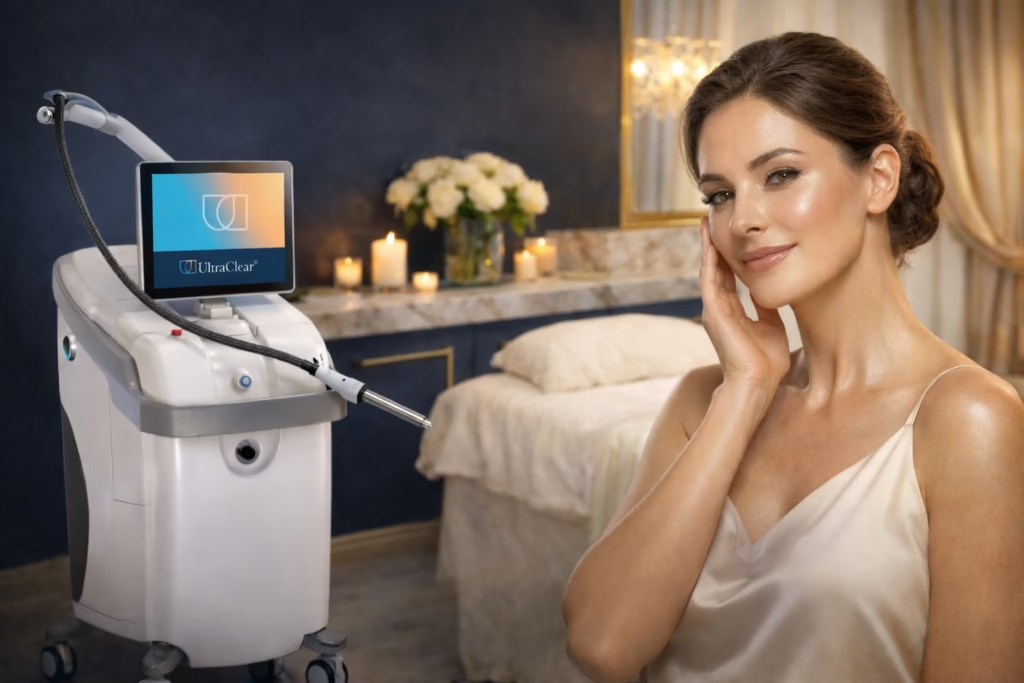
Ultraclear laser represents one of the most exciting developments I have seen in that space.
After careful evaluation of the science, clinical data, and real world outcomes, I have introduced Ultraclear into my London clinic as part of a comprehensive, doctor led approach to skin health and facial rejuvenation. This is not about aggressive resurfacing for the sake of it. It is about controlled, precise stimulation of renewal.
What Is Ultraclear Laser Treatment?
Ultraclear is a fractional cold fibre laser designed to resurface the skin, improve texture, reduce fine lines, and stimulate collagen production with a favourable recovery profile compared with traditional ablative lasers.
Unlike older generation systems that rely purely on heat, Ultraclear uses a unique cold fibre technology that delivers energy with precision and controlled tissue interaction. This allows us to target:
- Fine lines and wrinkles
- Sun damage and pigmentation irregularity
- Acne scarring
- Enlarged pores
- Early laxity
- Crepey lower eyelid and perioral skin
The key word is precision. In aesthetic medicine, precision is everything.
Why I Chose Ultraclear for My Clinic
When introducing any new technology into practice, I look at three pillars:
- Clinical evidence and safety
- Patient experience
- Longevity of results
Ultraclear stands out because it allows for tailored treatment depths and intensities. This means I can treat a 35 year old concerned about early textural change very differently from a 60 year old with deeper rhytids and dermal thinning.
It integrates beautifully with the way I already practise, which is layered and strategic rather than reactive. Skin quality underpins everything. You can place the most beautiful filler in the world, but if the skin is dull and lax, the overall result will never feel refined.
As I discuss in my article on why medical training matters in aesthetic medicine, understanding anatomy and tissue response is fundamental when using advanced energy devices. Laser resurfacing bridges that gap.
What Makes Ultraclear Different from Traditional Laser Resurfacing?
Traditional ablative lasers can produce impressive results, but often at the cost of prolonged redness, oozing, and social downtime.
Ultraclear laser technology allows for:
- More controlled tissue interaction
- Customisable depth settings
- The ability to perform lighter rejuvenation or deeper corrective resurfacing
- Reduced thermal injury compared to older CO2 systems
This translates into a more adaptable treatment pathway. Some patients may choose a gentle refresh with minimal downtime. Others may opt for a deeper regenerative treatment for more dramatic change. For readers interested in professional discussion of laser technologies, publications such as Dermatology Times regularly review developments in regenerative devices.
It is not one size fits all, it’s bespoke.
Who Is an Ideal Candidate?
In clinic, I typically recommend Ultraclear for patients who:
- Feel their skin has lost luminosity
- Notice fine lines around the eyes and mouth
- Have mild to moderate acne scarring
- Have sun related textural damage
- Want tightening without surgery
It is also particularly powerful when combined with a holistic skin strategy including medical grade skincare, collagen stimulating injectables, dermal fillers, and carefully planned toxin placement where appropriate.
Ultraclear is not a substitute for volume restoration. It is a complement to it.
What About Downtime?
Downtime depends on the treatment intensity.
For lighter treatments, patients may experience redness and mild swelling for several days, similar to a strong sunburn. For deeper resurfacing, redness can last longer, followed by controlled peeling and regeneration.
The important distinction is that recovery is predictable and manageable when performed in a medically supervised environment.
As a GMC registered doctor with over twenty years of clinical experience, safety and patient selection remain central to everything I do. Energy based devices are powerful tools. They should always be used thoughtfully, with anatomical understanding and appropriate training.
Laser is not a beauty gadget. It is a medical device that interacts with living tissue.
Laser is not a beauty gadget. It is a medical device that interacts with living tissue.
A doctor led approach ensures:
- Appropriate patient assessment
- Identification of contraindications
- Evidence based treatment planning
- Integration with other modalities
- Safe management of complications if required
This is particularly important in London, where laser resurfacing is widely advertised but not always delivered within a robust medical framework.
My philosophy has always been balance. Enhancement, not exaggeration. Regeneration, not distortion. Ultraclear fits seamlessly into that philosophy.
The Long Term Vision
We are entering a new era in aesthetics. The conversation is shifting away from over correction and towards skin quality, collagen health, and subtle refinement. Patients are more educated than ever. They want natural results and sustainable rejuvenation.
Ultraclear is part of that evolution. It allows us to improve the canvas itself, rather than simply adjusting what sits on top of it. In my view, that is where true aesthetic medicine begins.
Considering Ultraclear Laser in London?
If you are exploring laser resurfacing or would like an honest, medically grounded opinion on whether Ultraclear is appropriate for your skin, consultations are available at my London Clinic.
Every treatment plan begins with a detailed assessment. No pressure. No over treatment. Just clarity.